Skip to content

Bikepacking has changed the way in which people explore the Sierra de Guara. It’s no longer just about heading out for a few hours’ ride: it’s about packing your bike with the essentials, linking stages together, sleeping in picture-postcard villages and reaching destinations that can only be accessed by bike. The Tour de Guara cycle tour — 225 km, 5 stages, one of the most comprehensive routes in the Aragonese Pyrenees — is the perfect excuse to do just that.
This guide consists of two parts. First, everything you need to know about bikepacking kit and bags in Guara. Next, the five stages of the route, with official details, a description, accommodation options and links to each page with downloadable GPX files.

What is bikepacking, and why is Guara an ideal destination?
Bikepacking is a combination of cycling and adventure involving an overnight stay. Unlike traditional cycle touring with panniers, bikepacking uses lightweight bags integrated into the frame, handlebars and saddle to minimise weight and maintain the bike’s agile geometry. The result is a way of travelling that allows you to ride along technical trails, forest tracks and back roads without compromising on a range of several days.
The Sierra de Guara offers everything a bikepacker could wish for: a network of trails and quiet roads, medieval villages with accommodation and places to eat, protected natural surroundings within the Natural Park, and a network of mapped routes with GPX files available. The Tour de Guara cycle tour is specifically designed for this kind of adventure.
What bags and kit do you need for bikepacking in Guara?
The bags: system and positioning
The bag system is the backbone of bikepacking. Unlike traditional panniers, bikepacking bags are attached directly to the bike without a rack, distributing the weight optimally and keeping the centre of gravity low.
| Category | What to bring | Where to place it |
|---|---|---|
| Handlebar bag | Warm clothing, rain jacket, compact sleeping bag | Front-mounted, easy access |
| Frame bag | Tools, repair kit, emergency rations | Optimal centre of gravity |
| Saddle bag | Clothes, toiletries, spare shoes | Greater volume available |
| Top-tube bags | Snacks, mobile phone, energy gels, documents | Access whilst in motion |
| Jugs and jug holders | Water: at least 2 litres whilst on the road | Frame (one or two) |
| Saddlebags (optional) | For trips lasting more than 4 days or involving camping equipment | Rear luggage rack |
For a 5-day cycle tour with accommodation in hostels or rural guesthouses —without the need for wild camping— a combination of a handlebar bag (10–20 L), a frame bag (4–6 L) and a saddle bag (8–16 L) is more than enough.
Clothing and personal equipment
| Type | Essential | Optional |
|---|---|---|
| Top section | 2 technical T-shirts, a lightweight rain jacket | Long-sleeved top for cold weather or evenings |
| Bottom section | 2 pairs of cycling shorts with a chamois, waterproof tights | Shorts for the village |
| Feet | Cycling shoes, technical socks | Waterproof leggings |
| Head and hands | Helmet, goggles, thin hat | Gloves, neck warmer |
| Toiletries | Essential toiletries, sun cream, basic first-aid kit | Microfibre towel |
| Electronics | GPS or mobile phone with offline tracking, charger | Power bank, camera |
The key to bikepacking is the ‘minimum viable’ rule: take only what you’ll use. On a 5-day tour with accommodation, two pairs of cycling shorts and two technical jerseys are enough if you wash one every night. You’ll be glad of the weight you’ve saved on your kit on the climbs of Stage 4.
The bike: which type works best on the Travesía Tour de Guara?
The route is mainly along local roads and tracks, with a low proportion of trails, except for Stage 3 (15 per cent). This makes it accessible to:
- Gravel bike: the ideal choice. Versatile, lightweight and comfortable on tarmac and track.
- Touring bike: an excellent choice for anyone who prioritises comfort and load-carrying capacity.
- Cross-country or hardtail mountain bikes: work well, especially on Stage 3 with its technical trail.
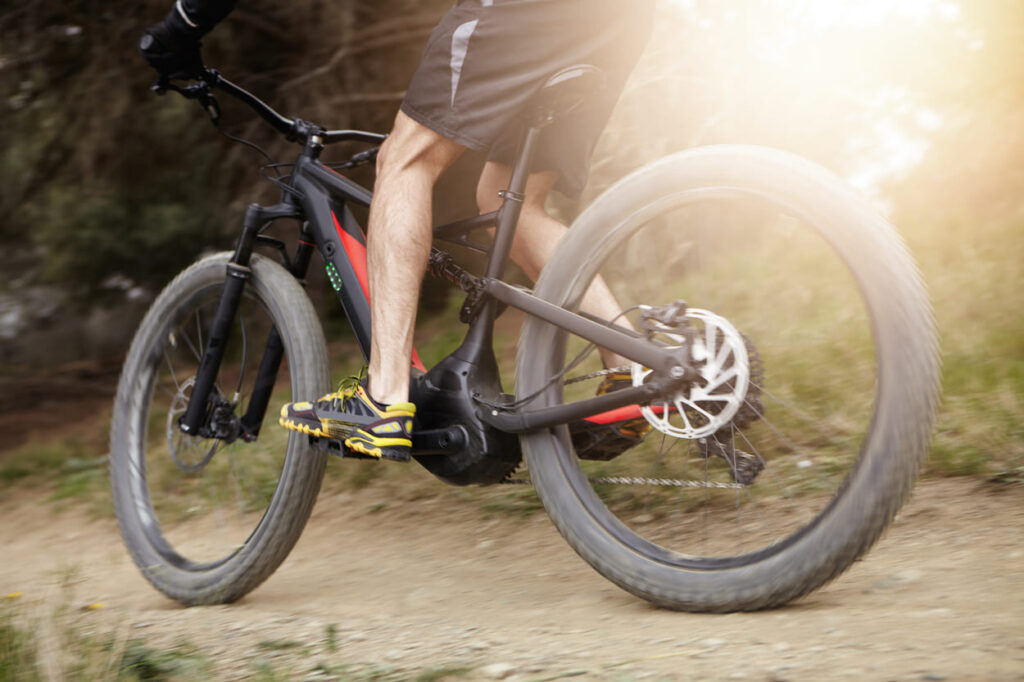
- E-MTB or electric gravel bike: an excellent choice for those who want to enjoy the scenery without the terrain being the main focus. The range is more than sufficient for each stage.

The Tour de Guara cycle tour: 5 stages, ~225 km
The Tour de Guara cycle tour is a 225-kilometre circular route that runs entirely through the Sierra y los Cañones de Guara Natural Park. It starts and ends in Colungo, on the border between the Somontano and the mountains, and links some of the most distinctive landscapes and villages of the Aragonese Pre-Pyrenees.
| Stage | Section | Distance | Elevation gain | Difficulty | Overnight stay |
|---|---|---|---|---|---|
| 1 | Colungo – Panzano | 43,5 km | +775 m | Medium | Panzano / Bierge |
| 2 | Panzano – Sabayés | 40,8 km | +531 m | Medium | Sabayés / Huesca |
| 3 | Sabayés – Nocito | 31,2 km | +757 m | Medium-High | Nocito / Las Bellostas |
| 4 | Nocito – Aínsa | 60,5 km | +933 m | High | Aínsa / Boltaña |
| 5 | Aínsa – Colungo | 49,1 km | +790 m | Medium | Colungo |
| Total | ~225 km | ~+3.786 m |
Stage 1: Colungo – Panzano
Distance: 43.5 km · Elevation gain: +775 m · Duration: 3–4 hours
The walk begins in Colungo, the gateway to the Vero River Cultural Park and its rock-shelter art sites, which are a World Heritage Site. The stage runs along the southern edge of the Natural Park, passes through the medieval village of Alquézar — a must-stop to top up your water supplies and enjoy the historic centre — and continues through olive groves and vineyards via Radiquero, Adahuesca and Bierge. It ends in Panzano, at the foot of the imposing Tozal de Guara.
Recommended place to stay overnight: Panzano or Bierge. The Rincón de Guara Hostel in Bierge is a classic choice amongst cycle tourists.
Don’t miss: the Salto de Bierge, the perfect spot for a swim before you reach your accommodation.
Official route details and GPX: Stage 1 – BGuara Cycling Rocks
Stage 2: Panzano – Sabayés
Distance: 40.8 km · Elevation gain: +531 m · Duration: 3.5–4 hours
The quietest part of the route follows secondary roads with little traffic, winding through almond and olive groves, always with the Tozal de Guara in view. It takes you past the popular bakery in Loporzano and offers the chance to go for a swim in the River Guatizalema near Sipán. It ends in Sabayés, at the foot of the spectacular Salto de Roldán waterfall.
Recommended place to stay overnight: Sabayés or the area around Huesca city centre, just a few kilometres away.
Don’t miss: the Salto de Roldán waterfall and the associated visitor centre, which are well worth a visit at the end of the stage.
Official route details and GPX: Stage 2 – BGuara Cycling Rocks
Stage 3: Sabayés – Nocito
Distance: 31.2 km · Elevation gain: +757 m · Duration: 4–5 hours
The wildest and most evocative stage of the entire journey. Take the cycle tourist into the heart of Guara, where time seems to have stood still in the mid- 20th century. The route passes through abandoned villages of extraordinary beauty: Bagüeste, with its watchtower-church; Nasarre, with its Romanesque gem; and Otín, set amongst huge, centuries-old oak trees. The terrain becomes more technical, with sections of stony path.
Recommended place to stay overnight: Nocito or Las Bellostas. Very few water points: only Asque and San Póliz.
Don’t miss: the abandoned villages of Bagüeste, Nasarre and Otín. Take plenty of water and food with you: the area is remote and difficult to access.
Official route details and GPX: Stage 3 – BGuara Cycling Rocks
Stage 4: Nocito – Aínsa
Distance: 60.5 km · Elevation gain: +933 m · Duration: 4.5–5.5 hours
The queen stage. It crosses the entire northern part of the Sierra de Guara along a little-used local road that runs through the Guarguera Valley, following the course of the River Guarga. The landscape is lush and verdant, with picturesque villages such as Laguarta and villages currently undergoing restoration, such as Lasaosa. After climbing up to the Puerto del Serrablo, the descent leads to Boltaña and ends in the wonderful medieval town of Aínsa.
Recommended place to stay overnight: Aínsa, which offers a wide range of accommodation options. The hostels in the historic centre are particularly worth a visit.
Don’t miss: Aínsa, a Historic-Artistic Site and one of Spain’s Most Beautiful Villages. Dinner here, after the longest leg of the journey, is a well-earned treat.
Official route details and GPX: Stage 4 – BGuara Cycling Rocks
Stage 5: Aínsa – Colungo
Distance: 49.1 km · Elevation gain: +790 m · Duration: 3.5–4.5 hours
The perfect ending. The final stage takes in the eastern part of the Sierra de Guara, passing through ancient villages and little-known hidden gems: Guaso, Arcusa, Almazorre and Bárcabo. The highlight is the Mirador del Vero, a must-see spot offering views of the canyon’s impressive cliffs. The beautiful village of Lecina and its thousand-year-old holm oak, just 2 km from the route, are well worth a detour. The San Caprasio Pass marks the end of the return journey to Colungo.
Recommended overnight stay: Colungo, the starting and finishing point of the loop.
Don’t miss: the Mirador del Vero: seeing the canyon you cycled through on the first day from above is the perfect way to round off the trip.
Official route details and GPX: Stage 5 – BGuara Cycling Rocks
Logistics: how to organise the journey
Accommodation
The route passes through an area with a good range of accommodation options on most of the stages. Alquézar (Stage 1), Aínsa (Stage 4) and Bierge offer the widest range of options. Stage 3, in the wildest heart of Guara, offers fewer options: Nocito and Las Bellostas are the nearest villages, and it’s advisable to book in advance, especially in spring and at long weekends.
On BGuara you’ll find a directory of bike-friendly accommodation throughout the area, organised by town and type.
Transport and logistics from the start
Colungo, the starting and finishing point of the route, is about 50 km from Barbastro and 90 km from Zaragoza. Most cycle tourists arrive by car and leave it parked in Colungo for the five days. It is also possible to travel to Barbastro by bus and cycle the first few kilometres.
Can it be done in 3 days instead of 5?
Yes, with a few adjustments. A 3-day version involves combining stages: long days of over 80 km, which are perfectly manageable on a gravel bike or e-bike but demanding for riders without a good level of fitness. Stage 4 (60.5 km) should not be combined with another stage due to its difficulty. A common combination over 3 days: Stages 1+2 / Stages 3+4 / Stage 5.

Frequently asked questions about bikepacking in Guara
Is wild camping required on the Tour de Guara trek?
No. The route is designed to include accommodation in villages at the end of each stage. If you’d prefer to go camping, there are campsites in Alquézar, Panzano and Lecina (the latter is temporarily closed). Wild camping is regulated in the Natural Park: please check the regulations before making any plans.
How much does a bike fitted for bikepacking in Guara weigh?
A reasonable amount of luggage for a 5-day trip including accommodation: between 8 and 12 kg. With a 10 kg gravel bike, the total weight comes to between 18 and 22 kg. With panniers and a touring bike, the weight can exceed 25 kg, which is particularly noticeable on the climbs of Stage 4.
Where can I download the GPX files for each stage?
Each official BGuara profile page includes a GPX file that can be downloaded directly. The five links are included in this article, at the end of each stage.
Is the route signposted?
Stages 1, 2, 4 and 5 mainly follow local roads with standard road signs. Stage 3 requires GPS tracking. The official BGuara fact sheets indicate the level of signposting for each section.
Can you do the walk in the opposite direction?
Sure. The anti-clockwise route is perfectly acceptable. The official route has been designed so that the toughest stage — Stage 4 — comes when cyclists have already built up some mileage and their morale is high after completing several stages.
Which apps are useful for navigating the journey?
Komoot (all stages have a profile on Komoot), Wikiloc and Strava are the most widely used apps in the area. Download the tracks offline before you set off: mobile coverage in the heart of Guara, particularly on Stage 3, is patchy or non-existent.
Ready to load up your bike and cycle the 225 km from Guara?
Bikepacking in the Sierra de Guara is one of those experiences that puts your relationship with cycling into a whole new perspective. Five days cycling through canyons, medieval villages, rock art and the landscapes of the Pyrenees, with just the essentials in our bags and the freedom to reach the next stop at our own pace. The Tour de Guara cycle tour route has been mapped out, the GPX files are ready, and your accommodation is waiting for you.
Download the tracks, explore the accommodation options and plan your adventure at bguara.com